Have multiple designations? Find the right subscription for you!

Back by popular demand!

Only $59

30+ Nursing Contact Hours

Convenient, Affordable Continuing Education for Nurses

Complete your continuing education requirements with over 30 accredited nursing contact hours designed for Registered Nurses (RN), Licensed Vocational Nurses (LVN), and Licensed Practical Nurses (LPN).

For just $59, you’ll receive access to more than 30 contact hours and a full year to complete your courses at your own pace.

Whether you’re renewing your nursing license, planning for your next renewal cycle, or simply looking for quality online nursing continuing education courses, the CareerSmart® Nursing 30 Contact Hour Bundle provides a convenient and affordable solution.

Reports to CE Broker every two weeks in the following states: Arkansas, District of Columbia, Florida, Georgia, New Mexico, and South Carolina.

Benefits

 Topics Include:

A healthcare worker, a Black woman with long braided hair, appears stressed, resting her forehead on her hand while standing against a light-colored wall next to a window.

Addressing Implicit Bias in Healthcare

This course examines implicit bias and its impact on healthcare interactions, decision-making, and outcomes. Learners will review the differences between implicit and explicit bias, explore how automatic and reflective thinking influence behavior, and consider the historical and personal origins of bias. The course also addresses stereotypes, stigmas, and tools used to evaluate implicit bias, along with strategies to help reduce unwanted biases in healthcare settings.
Course ObjectivesBy the end of this course, the learner will be able to:
  • Define implicit bias and the differences between implicit and explicit bias.
  • Distinguish the difference between System 1 and System 2 thinking.
  • Evaluate the origin of implicit bias, historically and within oneself.
  • Analyze stereotypes and stigmas, and implicit biases in healthcare.
  • Discuss some measurement tools in evaluating implicit biases and interventions to mitigate unwanted biases.

Continuing Education Credits

This course is approved for 2.0 CE/Contact Hours for the following professions:
  • Nurses (RN, LVN, LPN) (all states)
  • Certified Case Managers (CCM)
  • Certified Rehabilitation Counselors (CRC)
  • Social Workers (NASW)

Course Details

To receive 2.0 contact hours of continuing education credit, learners must pass the final quiz with 80% or more; the final quiz may be re-taken as often as needed. At CareerSmart Learning, we regularly review our courses to ensure learners receive accurate, timely, and relevant content. Courses are updated on an annual or three-year cycle. This course is scheduled to be updated or discontinued by August 1, 2028.
An elderly Asian man in a hospital gown smiling while interacting with a female healthcare worker in a lab coat, who is also smiling.

Cultural Diversity and Cultural Competence in Healthcare

This course examines the role of cultural competence in healthcare and its importance in supporting respectful, person-centered care. Learners will review key concepts related to cultural diversity, ethnicity, religion, age-specific populations, LGBTQ+ communities, disability, and veteran care. The course also explores emerging themes in cultural competence and how healthcare professionals can apply culturally responsive practices across diverse care settings.

Course Objectives

By the end of this course, the learner will be able to:

  • Define cultural diversity and cultural competence.
  • Identify emerging themes of cultural competence in healthcare.
  • Explain how ethnicity, diversity, and religion impact cultural understanding.
  • Evaluate cultural competence concerning the LGBTQ+ (Lesbian, Gay, Bisexual, Transgender, Queer, plus) community.
  • Explain the role of cultural competency in age-specific populations.
  • Apply cultural competence to those with physical, intellectual, developmental, and mental health disabilities.
  • Discuss the role of cultural competence in veteran care delivery.

Continuing Education Credits

This course is approved for 3.0 CE/Contact Hours for the following professions:

  • Nurses (RN, LVN, LPN) (all states)
  • Certified Case Managers (CCM)
  • Certified Rehabilitation Counselors (CRC)
  • Social Workers (NASW)

CareerSmart Learning is also an approved Nevada CE Provider (NV-14160). This course is Board approved for the Cultural Competency requirement for Nevada nurses.

Course Details

To receive 3.0 contact hours of continuing education credit, learners must pass the final quiz with 80% or more; the final quiz may be re-taken as often as needed.

At CareerSmart Learning, we regularly review our courses to ensure learners receive accurate, timely, and relevant content. Courses are updated on an annual or three-year cycle. This course is scheduled to be updated or discontinued by January 1, 2028.

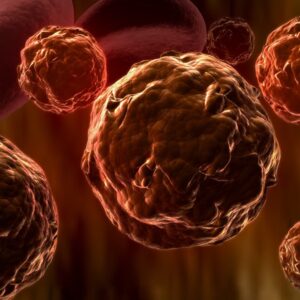
Microscopic view of bacteria involved in sepsis, depicted in a 3D illustration with a focus on a large central bacterium among smaller ones, all in a reddish hue.

Sepsis: A Deadly Encounter

This course provides an overview of sepsis, severe sepsis, and septic shock, with a focus on recognition, diagnosis, treatment, and risk factors. Learners will review how sepsis affects the human body, common clinical manifestations, and the importance of timely intervention. The course also addresses treatment approaches and key considerations for healthcare professionals supporting individuals at risk for sepsis.

Course Objectives

By the end of this course, the learner will be able to:

  • Define sepsis, severe sepsis, and septic shock.
  • Describe the clinical manifestations of the effect of sepsis on the human body.
  • Explain how sepsis is diagnosed.
  • Describe the treatments for sepsis.
  • Identify the risk factors for sepsis.

Continuing Education Credits

This course is approved for 2.0 CE/Contact Hours for the following professions:

  • Nurses (RN, LVN, LPN) (all states)
  • Advanced Practice RN (APRN): This course includes 0.5 pharmacotherapeutic contact hours
  • Critical Care RN (CCRN): meets the criteria for CCRN Synergy Continuing Education Recognition Point(s) (CERPS) in Category A
  • Certified Case Managers (CCM)
  • Certified Rehabilitation Counselors (CRC)
  • Social Workers (NASW)
  • CA Workers’ Compensation Claims Adjusters (WC CA)

Course Details

To receive 2.0 contact hours of continuing education credit, learners must pass the final quiz with 80% or more; the final quiz may be re-taken as often as needed.

At CareerSmart Learning, we regularly review our courses to ensure learners receive accurate, timely, and relevant content. Courses are updated on an annual or three-year cycle. This course is scheduled to be updated or discontinued by March 1, 2027.


Tablet, gavel, stethoscope and folders, representing ethics in healthcare.

Ethics for Nurses: An Overview of the Provisions

This course provides an overview of nursing ethics, with a focus on the American Nurses Association (ANA) Code of Ethics for Nurses. Learners will review the purpose and role of the ANA, the historical development of the Code, and the ten provisions that guide ethical nursing practice. The course also addresses how ethical standards apply to real-world case studies and examines the relationship between nursing ethics and the Code of Professional Conduct for Case Managers.

Course Objectives

By the end of this course, the learner will be able to:

  • Explain the purpose and role of the American Nurses Association (ANA).
  • Explain the history of the development of the Code of Ethics for Nurses.
  • Identify the ten provisions of the ANA Code of Ethics for Nurses.
  • Apply ethical standards to case studies effectively.
  • Recognize the correlation in nursing ethics and the Code of Professional Conduct for Case Managers.

Continuing Education Credits

This course is approved for 3.0 CE/Contact Hours for the following professions:

  • Nurses (RN, LVN, LPN) (all states)
  • Critical Care RN (CCRN): meets the criteria for CCRN Synergy Continuing Education Recognition Point(s) (CERPS) in Category B
  • Certified Case Managers (CCM)

Course Details

To receive 3.0 contact hours of continuing education credit, learners must pass the final quiz with 80% or more; the final quiz may be re-taken as often as needed.

At CareerSmart Learning, we regularly review our courses to ensure learners receive accurate, timely, and relevant content. Courses are updated on an annual or three-year cycle. This course is scheduled to be updated or discontinued by May 1, 2028.

A person's wrists and ankles are bound with heavy metal chains, symbolizing restraint or captivity.

Human Trafficking

This course will provide healthcare professionals with information about the face of human trafficking as it occurs worldwide and near to home. This course recognizes potential victims and the appropriate response to suspicion or disclosure of a human trafficking victim.
Course ObjectivesBy the end of this course, the learner will be able to:
  • Define human trafficking and its different forms.
  • Identify general indicators of possible human trafficking.
  • Identify health indicators of possible human trafficking.
  • State three areas of traumatic psychological impact on victims.
  • Identify the professional’s response to suspected or disclosed human trafficking.

Continuing Education Credits

This course is approved for 3.0 CE/Contact Hours for the following professions:
  • Nurses (RN, LVN, LPN) (all states)
  • Certified Case Managers (CCM)
  • Certified Rehabilitation Counselors (CRC)
  • Social Workers (NASW)

Course Details

To receive 3.0 contact hours of continuing education credit, learners must pass the final quiz with 80% or more; the final quiz may be re-taken as often as needed. At CareerSmart Learning, we regularly review our courses to ensure learners receive accurate, timely, and relevant content. Courses are updated on an annual or three-year cycle. This course is scheduled to be updated or discontinued by January 1, 2029.          
A smiling healthcare professional in blue scrubs, wearing a stethoscope around their neck, is sitting at a desk with a laptop and an open notebook. The individual appears to be working or taking notes. The background shows binders and a plant, suggesting a work environment, possibly a clinic or office.

Integrating Clinical Reasoning, Critical Thinking, & Clinical Judgment in Healthcare

This course focuses on the use of clinical reasoning, critical thinking, and clinical judgment in complex healthcare situations. Learners will review how to synthesize history, assessment findings, and diagnostic information to support comprehensive, ethical, and person-centered care decisions. The course also addresses the role of health technologies in clinical decision-making while maintaining attention to each individual’s needs, preferences, and care goals.
Course ObjectivesBy the end of this course, the learner will be able to:
  • Apply clinical reasoning processes effectively in the management of complex healthcare scenarios by synthesizing history, physical examination findings, and diagnostic data to formulate comprehensive care plans, while considering the individual’s unique needs and preferences.
  • Apply critical thinking skills to evaluate clinical information, accurately assess conditions of individuals receiving care, and identify underlying assumptions in clinical practice.
  • Apply clinical judgment skills to make informed, ethical, and person-centered care decisions.
  • Discuss how to effectively integrate health technologies to inform clinical decisions and maintain a person-centered approach.

Continuing Education Credits

This course is approved for 4.0 CE/Contact Hours for the following professions:
  • Nurses (RN, LVN, LPN) (all states)
  • Certified Case Managers (CCM)
  • Certified Rehabilitation Counselors (CRC)
  • Social Workers (NASW)
  • CA Workers’ Compensation Claims Adjusters (WC CA)

Course Details

To receive 4.0 contact hours of continuing education credit, learners must pass the final quiz with 80% or more; the final quiz may be re-taken as often as needed. At CareerSmart Learning, we regularly review our courses to ensure learners receive accurate, timely, and relevant content. Courses are updated on an annual or three-year cycle. This course is scheduled to be updated or discontinued by October 1, 2027.  
A person with a distressed expression rests their head on their arm on a table. In front of them, there are scattered pills and syringes, symbolizing substance abuse or addiction.

Opioid Crisis Management

This course examines opioid misuse, withdrawal, and evidence-based approaches to pain management. Learners will review the epidemiology and impact of opioid misuse, recognize common signs and symptoms, and consider alternatives to opioids for managing pain. The course also addresses collaborative care strategies, including interdisciplinary communication, to support improved outcomes for individuals with Opioid Use Disorder (OUD).

Course Objectives

By the end of this course, the learner will be able to:

  • Describe the epidemiology and impact of opioid misuse.
  • Identify signs and symptoms of opioid misuse and withdrawal.
  • Identify alternatives to opioids for managing and treating pain.
  • Identify approaches, including interdisciplinary communication and collaboration, to maximize outcomes for individuals with Opioid Use Disorder (OUD).

Continuing Education Credits

This course is approved for 3.0 CE/Contact Hours for the following professions:

  • Nurses (RN, LVN, LPN) (all states)
  • Advanced Practice RN (APRN): This course includes 3.0 pharmacotherapeutic contact hours
  • Certified Case Managers (CCM)
  • Certified Rehabilitation Counselors (CRC)
  • Social Workers (NASW)
  • California Workers Compensation Claims Adjusters (WC CA)

Course Details

To receive 3.0 contact hours of continuing education credit, learners must pass the final quiz with 80% or more; the final quiz may be re-taken as often as needed.

At CareerSmart Learning, we regularly review our courses to ensure learners receive accurate, timely, and relevant content. Courses are updated on an annual or three-year cycle. This course is scheduled to be updated or discontinued by December 1, 2027.

Male doctor showing medical information on a smartphone to an older woman wearing glasses wearing an orange blouse.

Bridging Gaps: A Comprehensive Guide to Achieving Health Literacy and Equity

This course examines the connection between health literacy, equity, and meaningful access to healthcare information and services. Learners will review key concepts, common barriers, and methods for assessing healthcare consumer health literacy levels. The course also addresses strategies to improve health literacy and equity through clear communication, practical interventions, and collaboration across disciplines.
Course ObjectivesBy the end of this course, the learner will be able to:
  • Define the concepts of health literacy and equity.
  • Identify the barriers to health literacy and equity.
  • Discuss how to assess healthcare consumer health literacy levels.
  • Identify methods to implement strategies to improve health literacy and equity.
  • Discuss how to collaborate across disciplines to promote health literacy and equity.

Continuing Education Credits

This course is approved for 3.5 CE/Contact Hours for the following professions:
  • Nurses (RN, LVN, LPN) (all states)
  • Certified Case Managers (CCM)
  • Certified Rehabilitation Counselors (CRC)
  • Social Workers (NASW)

Course Details

To receive 3.5 contact hours of continuing education credit, learners must pass the final quiz with 80% or more; the final quiz may be re-taken as often as needed. At CareerSmart Learning, we regularly review our courses to ensure learners receive accurate, timely, and relevant content. Courses are updated on an annual or three-year cycle. This course is scheduled to be updated or discontinued by June 1, 2028.
A woman in a domestic setting appears fearful, holding up her hands defensively against an unseen aggressor.

Intimate Partner Violence and Abuse Reporting

This course examines intimate partner violence, including common forms, risk factors, early warning signs, and potential consequences. Learners will review screening tools and strategies, barriers to addressing intimate partner violence, and the responsibilities of mandated reporters. The course also addresses ethical considerations related to assessment, documentation, and reporting when intimate partner violence is suspected.
Course ObjectivesBy the end of this course, the learner will be able to:
  • Define intimate partner violence and the different forms of intimate partner violence.
  • Identify the four basic risk factors, based on the social-ecological model, for increased likelihood of intimate partner violence.
  • Identify some of the early warning signs of intimate partner violence in initial clinical presentation.
  • Describe tools and strategies for screening individuals for possible intimate partner violence.
  • Recognize the responsibilities and ethical considerations for mandated reporters related to assessment, documentation, and reporting of suspected intimate partner violence.
  • Identify some of the barriers to addressing intimate partner violence.
  • Recognize other consequences associated with intimate partner violence.

Continuing Education Credits

This course is approved for 4.5 CE/Contact Hours for the following professions:
  • Nurses (RN, LVN, LPN) (all states)
  • Certified Case Managers (CCM)
  • Certified Rehabilitation Specialists (CRC)
  • Social Workers (NASW)

Course Details

To receive 4.5 contact hours of continuing education credit, learners must pass the final quiz with 80% or more; the final quiz may be re-taken as often as needed. At CareerSmart Learning, we regularly review our courses to ensure learners receive accurate, timely, and relevant content. Courses are updated on an annual or three-year cycle. This course is scheduled to be updated or discontinued by February 1, 2027.
A conceptual image showing a hand interacting with a futuristic interface of healthcare and technology icons, symbolizing advanced medical informatics.

Medical Errors: Reporting and Disclosure

This course examines the legal, regulatory, and quality-related aspects of medical error reporting and disclosure. Learners will review legislative trends, federal and state reporting requirements, and the legal implications of mandatory medical error reporting. The course also addresses publicly reported quality measures, their connection to healthcare reimbursement, and current approaches to full medical error disclosure.
Course ObjectivesBy the end of this course, the learner will be able to:
  • Identify legislative trends in medical error reporting requirements.
  • Identify the relationship between federal and state error reporting laws.
  • Discuss the legal implications of mandatory medical error reporting.
  • Recite three or more publicly reported quality measures.
  • Define the relationship between error reporting, quality measures, and healthcare reimbursement.
  • Recall trends, methods, and outcomes of full medical error disclosure.

Continuing Education Credits

This course is approved for 2.0 CE/Contact Hours for the following professions:
  • Nurses (RN, LVN, LPN) (all states)
  • Certified Case Managers (CCM)
  • Certified Rehabilitation Counselors (CRC)
  • Social Workers (NASW)
  • California Workers’ Compensation Claims Adjusters (WC CA)

Course Details

To receive 2.0 contact hours of continuing education credit, learners must pass the final quiz with 80% or more; the final quiz may be re-taken as often as needed. At CareerSmart Learning, we regularly review our courses to ensure learners receive accurate, timely, and relevant content. Courses are updated on an annual or three-year cycle. This course is scheduled to be updated or discontinued by October 1, 2028.
An older woman with gray hair, wearing a black cardigan and white shirt, sits on a couch, comforting a younger woman with dark hair in a ponytail, wearing a denim shirt and jeans. The younger woman is crying, with her head resting on her arm, while the older woman has her eyes closed and is holding the younger woman's arm.

Suicide Prevention: Recognizing and Assessing

This course examines suicide and suicide attempts, including risk factors at the individual, relationship, and community levels. Learners will review suicide prevention strategies from the Centers for Disease Control and Prevention, as well as The Joint Commission’s National Patient Safety Goals related to inpatient suicide prevention. The course also addresses clinical interventions, safety-focused best practices, and the legal and ethical considerations involved in supporting individuals at risk for suicide or suicide attempts.
Course ObjectivesBy the end of this course, the learner will be able to:
  • Define suicide and suicide attempts.
  • Identify individual, relationship, and community risk factors for suicide and suicide attempts.
  • Discuss the Center for Disease Control’s strategies for suicide prevention.
  • Discuss The Joint Commission’s National Patient Safety Goals to prevent inpatient suicide and suicide attempts.
  • Describe clinical interventions, strategies, and best practices to keep individuals at risk for suicide and suicide attempt safe.
  • Discuss the legal and ethical aspects of working with individuals at risk for suicide or suicide attempts.

Continuing Education Credits

This course is approved for 3.0 CE/Contact Hours for the following professions:
  • Nurses (RN, LVN, LPN) (all states)
  • Certified Case Manager (CCM)
  • Certified Rehabilitation Counselor (CRC)
  • Social Workers (NASW)

Course Details

To receive 3.0 contact hours of continuing education credit, learners must pass the final quiz with 80% or more; the final quiz may be re-taken as often as needed. At CareerSmart Learning, we regularly review our courses to ensure learners receive accurate, timely, and relevant content. Courses are updated on an annual or three-year cycle. This course is scheduled to be updated or discontinued by June 1, 2029.


Online Continuing Education Designed for Busy Nurses

Finding time for continuing education can be difficult when you’re balancing shifts, family responsibilities, and professional commitments.

Our online nursing CE courses allow you to complete your contact hours whenever it is convenient for you. Learn during evenings, weekends, lunch breaks, or between shifts. Your progress is saved automatically, so you can complete your courses on your schedule.

Nurses reviewing online continuing education requirements for nursing contact hours

Why Nurses Choose CareerSmart®

Quality Accredited Nursing CE

Access pre-approved, professionally developed continuing education courses created and bundled specifically for nurses.

Flexible Learning

Complete your courses anytime and anywhere with internet access and enjoy one full year to finish your contact hours.

Immediate Certificates

Certificates are available immediately after successful course completion, making it easy to document your continuing education activities.

Trusted Online Education

Thousands of healthcare professionals rely on CareerSmart® for convenient, high-quality online continuing education and professional development.


Interested in this bundle for your team? Ask us about professional partnership opportunities to help support your goals.


Additional Program Details

Each course module includes a final quiz that must be passed with 80% or more. Final quizzes may be re-taken as often as needed. Individual course certificates will be available immediately upon completion of each course. Each individual course certificate specifies the number of CE/contact hours awarded and the corresponding approval numbers for each applicable designation.

Access to this program expires one year from date of purchase.

Frequently Asked Questions

This bundle includes 33 accredited nursing contact hours.

You will receive one full year of access beginning on your purchase date.

No. This product is a one-time purchase that includes one year of access to selected nursing continuing education courses.

Yes. All courses are completed online and entirely at your own pace.

Yes. Courses can be completed from a desktop computer, tablet, or mobile device.

The Nursing 30 Contact Hour Bundle is designed for Registered Nurses (RN), Licensed Vocational Nurses (LVN), and Licensed Practical Nurses (LPN) seeking convenient online continuing education for license renewal and professional development.

All  courses in the Nursing 30 Contact Hour Bundle are pre-approved for continuing nursing education nationwide. CareerSmart® is accredited as a provider of nursing continuing professional development by ANCC and also approved by the California Board of Registered Nursing (CA BRN), Florida Board of Nursing (FL BON), and Nevada State Board of Nursing.  The bundle includes some state-specific topic requirements for license renewal, like Human Trafficking, Medical Errors, Implicit Bias, and others. Please check with your State Board of Nursing to confirm specific license renewal requirements. 

CareerSmart® reports eligible CE completions to CE Broker every two weeks for Arkansas, District of Columbia, Florida, Georgia, New Mexico, and South Carolina. Please confirm your specific license renewal requirements with your state board.

Complete Your Nursing Continuing Education Online

Get the nursing contact hours you need with flexible online learning, one year of access, and instant certificates upon completion.

30+ Nursing Contact Hours • $59 • One Year of Access