Have multiple designations? Find the right subscription for you!

Only $60

California Assisted Living Waiver (ALW)
TBI Training Package

2 Hours of Traumatic Brain Injury Education for Assisted Living Waiver Providers

Prepare your staff to support individuals with traumatic brain injury while addressing California Assisted Living Waiver (ALW) TBI education requirements. 

California’s Assisted Living Waiver provides eligible Medi-Cal beneficiaries who require nursing-facility-level care the opportunity to receive services in approved community settings, including participating Residential Care Facilities for the Elderly (RCFEs). 

For staff providing Residential Habilitation services to ALW participants with traumatic brain injury (TBI), the waiver requires a minimum of two hours of documented approved TBI-specific education, followed by a minimum of two hours of documented approved continuing education each year thereafter. 

The CareerSmart® California ALW TBI Training Package combines two self-paced online brain injury courses for a total of 2.25 hours of TBI-focused education. 

This training package is designed to support the TBI education requirements of California’s Assisted Living Waiver (ALW) program. CareerSmart® does not guarantee that this training will be accepted or approved by the California Department of Health Care Services (DHCS). Providers should confirm training eligibility and acceptance with their DHCS representative.  Please click here for more information from DHCS. 

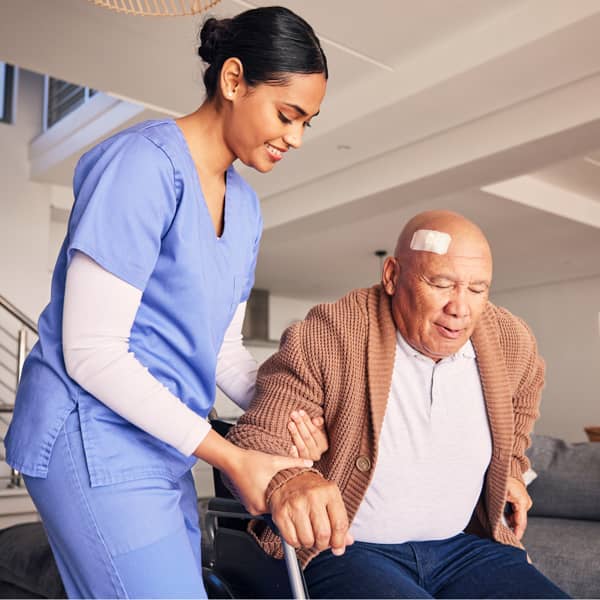
Healthcare caregiver assisting an older adult with a head bandage from a wheelchair in a residential care setting.

Package Highlights

What’s Included? 

A graphic image depicting a human brain in pink, overlaid with two crossed silver duct tapes, set against a soft teal background.

Rehabilitation of Slow-to-Recover Brain Injury Patients 

1.0 Hour 

You’ll Learn To: 

  • Describe the philosophy of rehabilitation, levels of brain injury and prognosis for rehabilitation. 
  • Explain complications associated with slow-to-recover brain injuries. 
  • Identify appropriate rehabilitation candidates, treatment options and goals for lower-functioning patients. 
  • Identify appropriate placement options and services available for individuals with significant brain injuries. 
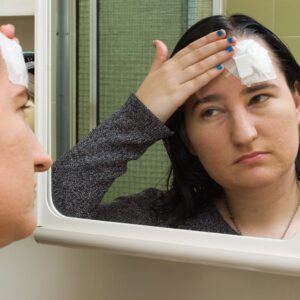
A woman examines her reflection in a bathroom mirror, touching a bandage over her left eyebrow with a concerned expression.

How I Learned I Had a TBI — A Patient’s Story 

1.25 Hours 

You’ll Learn To: 

  • Recognize signs and symptoms that may contribute to identifying a traumatic brain injury. 
  • Identify different phases of rehabilitation and their potential benefits. 
  • Understand emotional and psychological challenges experienced by individuals with TBI and their families. 
  • Recognize residual and ongoing challenges that may continue long after the initial injury. 

Who Should Take This Training? 

This package is designed especially for: 

A healthcare professional supports an older adult in a residential care setting. This image accompanies CareerSmart® Learning's California Assisted Living Waiver TBI Training Package, which provides online traumatic brain injury education for staff supporting individuals through California's ALW Residential Habilitation services.
California Board of Registered Nursing BRN logo in blue and white.

Continuing Education 

Courses are pre-approved by the California Board of Registered Nursing for a combined total of 2.25 CE/Contact Hours for Nurses (RN, LVN, LPN). 

Each course includes a final quiz that must be passed with a score of 80% or higher. Quizzes may be retaken as often as necessary. 

The courses in this package do not include pre-approved continuing education hours/credits for RCFE Administrator or ARF Administrator certification renewal.

Frequently Asked Questions

The California Assisted Living Waiver (ALW) is a Home and Community-Based Services program that allows eligible Medi-Cal beneficiaries who require nursing-facility-level care to receive services in an assisted living or other approved community setting instead of a nursing facility. 

For staff providing Residential Habilitation services, the ALW establishes TBI-specific education requirements. Applicable staff must receive a minimum of two hours of documented approved education specific to traumatic brain injury and a minimum of two hours of documented approved continuing education each year thereafter. 

The package contains two courses providing a combined 2.25 hours of TBI-focused education. 

The package includes: 

  1. Brain Injury: Rehabilitation of Slow-to-Recover Brain Injury Patients — 1.0 hour 
  1. Brain Injury: How I Learned I Had a TBI — A Patient’s Story — 1.25 hours 

Yes. Learners receive individual certificates upon successful completion of each course, providing documentation of the TBI education completed. 

Yes. Both courses are completely online and self-paced, allowing staff to complete their training when it works best for their schedules. 

No. The training may be taken by assisted living and residential care staff seeking education about traumatic brain injury. Eligible licensed and certified professionals may also receive continuing education credit. 

Yes. Both courses are pre-approved by the California Board of Registered Nursing (CA BRN) for Nurses (RN, LVN, LPN) for a combined total of 2.25 CE/contact hours.

This program does not include pre-approved continuing education hours/credits for RCFE Administrator or ARF Administrator certification renewal.
Yes. CareerSmart® offers organizational training solutions for RCFEs and other assisted living providers. Contact us to discuss group enrollment, staff training and other education needs. 

Read CareerSmart®‘s California Assisted Living Waiver and TBI Training: What Providers Need to Know for an overview of the program, Residential Habilitation services and TBI-specific education requirements. 

Prepare Your Staff to Better Understand Traumatic Brain Injury 

Skilled nursing facility care team supporting long-term care, compliance training, staff development, and quality resident outcomes.

Give your team convenient access to TBI-focused education while helping prepare them to support the complex physical, cognitive, behavioral and psychosocial needs of individuals living with traumatic brain injury. 

2 Courses | 2.25 Hours | 100% Online | Self-Paced | Immediate Certificates

Need Training for Your Entire Facility? 

CareerSmart® partners with RCFEs, assisted living communities, and other healthcare organizations to make staff training simple and scalable. 

Featured Courses:

Activities of Daily Living (ADL) and Assisting Persons with Dementia (Caregiver Training) – 1.5 Hours

A healthcare worker in a blue uniform assists an elderly woman at a dining table in a bright kitchen. The worker, a young woman with curly hair, smiles as she serves food, while the senior, with short white hair, looks up at her appreciatively.

This course provides practical strategies for assisting individuals living with dementia with activities of daily living (ADLs) in ways that promote dignity, independence, and quality of life.

Elder Abuse & Reporting
(CA-mandated)

A female nurse in blue uniform smiling and comforting an elderly man by placing her hand on his shoulder.

This is a video training on elder abuse and reporting and California legal obligations of mandated reporters in long term care settings.  All individuals who work in long term care settings and who work with seniors or residents are mandated reporters and are required by California law to review these videos.

Person-Centered Care:
An Overview
(Caregiver Training) – 1.0 Hour

A healthcare professional in a blue scrub comforting an older woman in a red shirt, both sitting and engaging in a supportive conversation.

This course explores how to honor each resident’s preferences, values, and individuality while providing support. Participants will learn why person-centered care is essential to resident well-being, explore common barriers to implementation, and identify practical steps for incorporating person-centered practices into daily care and services.