Are you in a leadership role by default—because of your experience, confidence, or just being “that person” who gets things done?
Have you ever had to step up during a tough shift, manage a chaotic team, or coach a new hire without any formal training?
Have you ever wondered how your leadership style affects your ability to guide, support, and inspire your team?
If you nodded along, you’re not alone. In healthcare, leadership doesn’t always come with a title. Sometimes, it just comes with trust, responsibility, and a whole lot of heart.
So… What’s Your Style?
Let’s take a look at a few leadership styles common in healthcare—and how each one can impact the way you lead.
 Transformational Leadership
“Let’s grow together.”
You’re a visionary. You lead by inspiring your team to be their best selves, constantly pushing for growth, innovation, and better outcomes.
Best for: Motivating change, building strong cultures, and driving excellence.
Heads up: Pace yourself—burnout is real when you’re always “on.”
 Transactional Leadership
“Let’s keep it structured.”
You focus on efficiency, expectations, and accountability. Clear roles, rules, and rewards keep things running smoothly.
Best for: High-pressure, protocol-heavy environments like emergency departments.
Heads up: Don’t forget the human side—structure is great, but support matters too.
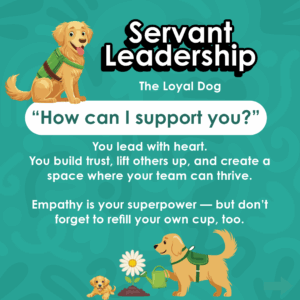 Servant Leadership
“How can I support you?”
You lead by lifting others. You listen, empathize, and create space for your team to succeed. Your style builds trust and loyalty.
Best for: Long-term care, hospice, and any setting where emotional intelligence is key.
Heads up: Take care of yourself, too—you can’t pour from an empty cup.
 Situational Leadership
“It depends.”
You adapt. Your leadership style changes based on the team, the task, or the challenge at hand. You’re flexible and responsive.
Best for: Leading diverse teams or managing changing patient loads and care environments.
Heads up: Be intentional—your team still needs consistency and clarity.
Ready to Lead with Confidence?
Whether you’ve had formal leadership training or have been learning on the job, understanding how you lead is a critical first step. Effective nurse leaders communicate with purpose, build trust, and create resilient teams that deliver high-quality care.
The Nursing Leadership Excellence Certificate is designed for nurses ready to strengthen their leadership skills or prepare for the next step in their professional journey. This comprehensive program brings together essential leadership topics—including leadership styles, communication, conflict resolution, and team dynamics—into a structured learning experience tailored to healthcare environments.
If you have emerging leaders on your team or are ready to invest in your own growth, this certificate program provides practical, real-world education that supports confident leadership and stronger outcomes.
👉 Explore the Nursing Leadership Excellence Certificate

References
Adams J, Mesnik J, Ponte P, Somerville J. (2018). Lead Like a Nurse. Maryland: ANA.
American Nurses Association. (n.d.). “Leadership in Nursing: Qualities & Why It Matters”. Accessed: 03.05.24 from: https://www.nursingworld.org/practice-policy/nursing-excellence/leadership-in-nursing/
Marturano J. (2015). Finding the space to lead: A practical guide to mindful leadership (1st ed.) Bloomsbury Press.
Specchia ML, Cozzolino MR, Carini, et al. (2021). Leadership Styles and Nurses’ Job Satisfaction. Results of a Systematic Review. International Journal of Environmental Research and Public Health, 18(4):1552. doi: 10.3390/ijerph18041552