
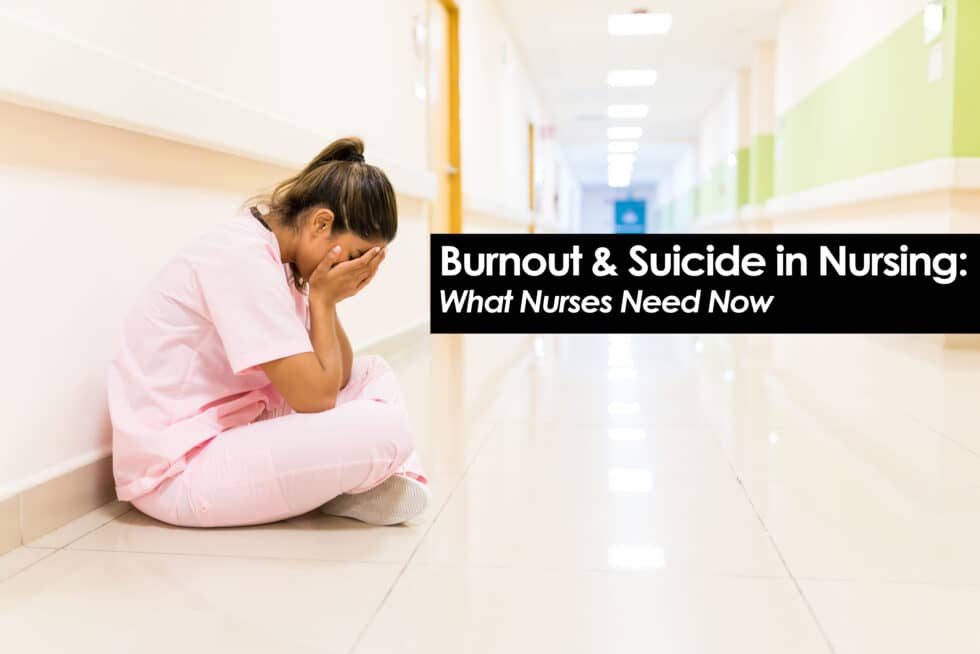
Burnout remains high across U.S. nursing and is linked with elevated suicide risk for registered nurses compared with non–healthcare workers. Addressing this is both a moral imperative and a patient safety necessity.
By the numbers (latest high-quality sources)
In a joint American Nurses Foundation/McKinsey survey (n=7,419; May 2023), 56% of nurses reported burnout symptoms and 64% reported “a great deal of stress.” 39% said they were likely to leave their position within six months; top drivers included insufficient staffing, not feeling valued, and inadequate compensation (ANA, 2023).
A large U.S. cohort (≈1.84M employed adults, 2008–2019) found registered nurses had a higher risk of suicide than non–healthcare workers (adjusted HR 1.64). Standardized suicide rates were ~16 per 100,000 for RNs vs 12.6 for non-healthcare workers (Support workers ~21.4; health techs ~15.6.) (JAMA, 2023).
The Centers for Disease Control and Prevention (CDC) reports that the U.S. had ~49,000 suicide deaths in 2023, near historic highs—important context for workplace prevention in nursing (CDC, 2025).
Burnout remains widespread in nursing, and RNs—especially women in nursing—show elevated suicide risk vs peers outside healthcare (JAMA, 2023).

Warning signs nurses should know (for yourself & colleagues)
Act if these are new, escalating, or tied to a painful event/change:
- Talking about wanting to die; feeling like a burden; hopelessness
- Making a plan; researching methods; giving away possessions; saying goodbye
- Withdrawing; extreme mood swings; sleeping too much/too little
- Risky behavior; increased alcohol/drug use; feeling trapped or in unbearable pain
(Adapted from NIMH and 988 Lifeline.)
If there’s immediate risk, call/text 988.
What works: Nursing-specific interventions.
Organization & system level (leaders, this is your lane)
- Safe staffing & workload redesign: Address short staffing and high patient loads; reduce administrative/documentation burden (scribes/AI assist; lean EHR workflows). These were top burnout drivers for nurses in the 2023 ANF/McKinsey survey (ANA, 2023)
- Workplace violence prevention: Implement The Joint Commission’s Workplace Violence Prevention Standards (effective Jan 1, 2022)—leadership oversight, reporting, data, training, and post-incident support (TJC, 2022).
- Confidential mental-health access without penalty: Follow ANA guidance—ensure affordable, confidential care that does not threaten licensure or employment; audit credentialing/licensure forms to remove intrusive mental-health questions (toolkits available via the Dr. Lorna Breen Foundation) (Dr. Lorna Breen Foundation, 2022).
- Adopt national frameworks: Align with the National Academy of Medicine’s National Plan for Health Workforce Well-Being to guide governance, metrics, and accountability.
Unit-level actions (nurse leaders & teams)
Build brief well-being huddles into shift start/finish; normalize check-ins and hand-off debriefs after critical events.
Establish rapid-access options (embedded counselors, 24/7 tele-MH, peer support) and protect time to use them (consistent with ANF/McKinsey recommendations).
Realistic self-care kit for nurses
Self-care can’t fix unsafe systems, but it does buffer stress between system changes.
1. Know your early flags
Identify your personal “tells” (sleep shift, irritability, rumination). Write a 2-line if/then plan and share it with a colleague.
2. Micro-recovery on shift (≈10–15 min total)
Two or three 90-second breathing resets; one hydration/fuel pause; one mini-debrief post-event. These align with recommendations to prioritize basics, connection, and psychological safety.
3. Off-shift foundations
Keep a regular sleep window, light movement, and sunlight exposure; schedule one weekly non-clinical joy activity.
4. Use professional help early
Confidential EAP/in-network therapy or tele-mental health. If time/cost are barriers (common for nurses), ask for protected time and low-/no-cost options—an organizational responsibility per ANA/NAM guidance.
5. How to respond if you’re worried about a nurse colleague
Ask directly: “I’ve noticed ____. Are you thinking about suicide?”
Listen without judgment; stay with them if risk is imminent.
Connect to help: call/text 988 or chat at 988lifeline.org; follow your facility’s urgent MH pathway; escalate per policy to ensure safety.
6. Crisis resources (add to badge cards & break rooms)
988 Suicide & Crisis Lifeline: Call or text 988, or chat at 988lifeline.org (24/7, confidential).
Advance Your Clinical Knowledge—Access These Courses with Your Subscription
For healthcare professionals addressing nursing burnout and suicide prevention, staying informed is critical. These accredited continuing education courses—included in all CareerSmart Learning subscriptions—offer timely, evidence-based content to support effective care delivery:
- Suicide Prevention (3.0 CE Hours): Analyze risk factors, strategies, and best practices for keeping individuals are risk for suicide and suicide attempt safe.
- Effects of Chronic Stress on Brain and Body (1.0 CE Hour): Become familiar with the effects of stress on the brain and body and to provide tools for the prevention of caregiver burnout.
- Caregiver Burnout in Long Term Care (2.0 CE Hour): Learn practical guidelines for recognizing, treating, and preventing caregiver burnout in a long-term care setting.
- Wellness for Healthcare Professionals: A Balancing Act (2.0 CE Hour): Provides an overview of wellness-related issues and tips for overcoming common challenges for professionals working in healthcare to achieve an optimal work/life/wellness balance.
Included in our subscription plans at a discount!
References:
American Nurses Foundation/McKinsey (Nov 2023): Understanding and prioritizing nurses’ mental health and well-being—burnout (56%), high stress (64%), intent to leave (39%), drivers (staffing, feeling undervalued). ANA
JAMA (2023): National cohort (2008–2019) shows elevated suicide risk for registered nurses (HR 1.64), health support workers (HR 1.81), technicians (HR 1.39); standardized RN suicide rate ~16/100,000 vs 12.6 for non-health-care workers. JAMA NetworkJWatchBecker’s Hospital Review
CDC (2025 page, 2023 data): ~49,000 U.S. suicide deaths in 2023. CDC
NIMH & 988 Lifeline: Evidence-based warning signs lists. https://988lifeline.org/learn/warning-signs/?utm_source=chatgpt.com
The Joint Commission: Workplace Violence Prevention Standards (effective Jan 1, 2022). Joint Commission Digital Assets
Dr. Lorna Breen Foundation. (2022). Remove Intrusive Mental Health Questions from Licensure and Credentialing Applications. Accessed:https://drlornabreen.org/wp-content/uploads/2022/12/ALL-IN-Audit-Change-Communicate-Toolkit.pdf

