

A patient arrives in the emergency department with subtle signs of sepsis. Her blood pressure is beginning to fall. Her respiratory rate is climbing. She seems just a little more confused than when she checked in.
The nurse immediately recognizes the warning signs, activates the sepsis protocol, and notifies the provider. Within minutes, treatment begins.
The patient recovers without requiring intensive care, spends fewer days in the hospital, and is discharged home. That outcome wasn’t simply the result of good teamwork, it was the result of knowledge put into practice. Just months earlier, the nurse had completed continuing education on early sepsis recognition and participated in simulation training.
Now, imagine that same impact across dozens of clinicians, hundreds of patients, and multiple quality initiatives. That’s where continuing education (CE) becomes more than a regulatory requirement—it becomes a measurable investment.
The Cost of Poor Quality
Poor quality care comes at a significant human and financial cost. According to the World Health Organization, 1 in 10 patients are harmed while receiving healthcare, and nearly half of those events are preventable (Savitz et al., 2025). Preventable adverse events contribute billions of dollars in unnecessary healthcare spending each year through extended hospitalizations, additional treatments, readmissions, litigation, regulatory penalties, and lost productivity (Agency for Healthcare Research and Quality [AHRQ], 2025).
The financial impact extends well beyond patient care. Organizations experiencing poor quality often face increased staff turnover, lower patient satisfaction scores, declining quality metrics, missed reimbursement opportunities, and greater legal and regulatory risk.
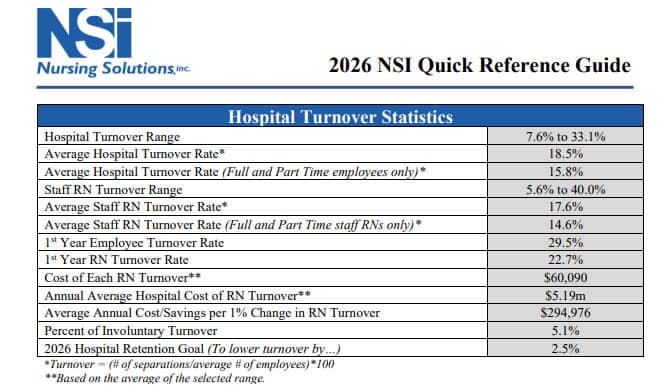
Workforce turnover creates another significant expense. According to the 2026 NSI Quick Reference Guide, the average cost of turnover for a staff registered nurse is approximately $60,090, while the average hospital loses an estimated $5.19 million annually to RN turnover. Even a 1% change in RN turnover can represent approximately $295,000 in annual cost or savings. (NSI Nursing Solutions, 2026). Investing in workforce development helps protect one of an organization’s most valuable assets: its people.
Continuing Education Drives Quality
High-performing healthcare organizations don’t view continuing education as simply checking a compliance box; they recognize it as a cornerstone of quality improvement.
Evidence-based education helps clinicians stay current with evolving standards of care, strengthen clinical judgment, improve communication, build confidence, and reduce variation in practice. Those improvements translate into safer care and more consistent clinical performance.
Organizations that prioritize ongoing education often see measurable improvements in areas such as:
- Early recognition of patient deterioration
- Medication safety
- Blood transfusion safety
- Fall and pressure injury prevention
- Healthcare-associated infection prevention
- Workplace violence preparedness
- Patient experience and communication
When clinicians understand not only what to do, but why they are doing it, evidence-based practices become part of everyday care.
Measuring the Return on Investment
The return on continuing education extends far beyond meeting professional licensure and certification renewal requirements. Its true value can be measured through improved patient outcomes, stronger workforce performance, and better organizational results.
Healthcare leaders should look beyond completion records and instead monitor indicators such as reductions in preventable adverse events, improvements in competency assessments, stronger employee retention, higher patient satisfaction scores, and greater readiness for accreditation surveys.
The connection between quality improvement and financial performance is becoming increasingly clear. In its 2025 Return on Investment for Quality (ROI-Q) report, the National Association for Healthcare Quality (NAHQ) highlighted organizations that achieved remarkable results through investments in quality initiatives and workforce capability. Reported outcomes included a 194% improvement in cost avoidance resulting in more than $6.5 million in savings over two years, a 50% reduction in serious safety events, a 92% reduction in hospital-acquired condition penalties, and $15–20 million in annual pay-for-performance gains (NAHQ, 2025).
These findings reinforce an important reality: quality initiatives are only as successful as the people implementing them. Continuing education equips healthcare professionals with the knowledge, clinical judgment, and confidence needed to consistently deliver safe, high-quality care.
Education Is an Investment, Not an Expense
Healthcare organizations invest millions of dollars in technology, equipment, and infrastructure, yet one of the greatest drivers of quality remains the competence of the workforce.
A new policy alone rarely changes practice. Education bridges the gap between policy and performance by helping clinicians understand, apply, and sustain evidence-based care.
Whether the focus is sepsis recognition, blood transfusion safety, workplace violence prevention, respiratory assessment, or medication safety, the cost of providing high-quality education is often far less than the cost of managing a single preventable adverse event.
Education also supports employee engagement, professional growth, and retention—critical advantages as healthcare organizations continue to navigate workforce shortages and increasing demands for quality and patient safety.
The Outcome
Let’s return to our patient.
Because one nurse recognized sepsis early, treatment began within minutes instead of hours. The patient avoided septic shock, never required intensive care, and was discharged home sooner than expected.
For the patient, that meant a better outcome. For the organization, it meant avoiding a costly complication, preserving ICU resources, improving quality metrics, reducing the cost of care, and demonstrating the value of investing in workforce development.
One continuing education course influenced one clinical decision. One clinical decision improved one patient’s outcome. When you multiply that across hundreds of clinicians and thousands of patient encounters each year, continuing education is no longer simply a training expense, but one of the smartest strategic investments a healthcare organization can make.
Invest in Quality Through Continuing Education
At CareerSmart® Learning, we believe continuing education should do more than satisfy professional licensure and certification renewal requirements. It should strengthen clinical competence, improve patient outcomes, support workforce retention, and contribute to measurable organizational success.
Our evidence-based continuing education programs are designed to help healthcare professionals apply knowledge with confidence, empowering organizations to build safer teams, stronger quality outcomes, and a healthier bottom line.
Looking for evidence-based continuing education for your team?
Contact us to learn how CareerSmart® Learning can support your workforce development and training goals.

References
Agency for Healthcare Research and Quality. (2025). Learning health systems for patient safety. PSNet. https://psnet.ahrq.gov/perspective/learning-health-systems-patient-safety
National Association for Healthcare Quality. (2025). ROI-Q report: Quantifying the return on investment for quality. https://nahq.org/news-media/news/national-association-for-healthcare-quality-proves-a-financial-return-to-investing-in-quality/
NSI Nursing Solutions, Inc. (2026). 2026 National health care retention & RN staffing report. https://www.nsinursingsolutions.com/documents/library/nsi_national_health_care_retention_report.pdf
Savitz, L. A., Sousane, Z., & Mossburg, S. E. (2025). Learning health systems for patient safety. PSNet, Agency for Healthcare Research and Quality. https://psnet.ahrq.gov/perspective/learning-health-systems-patient-safety

