

I still remember the first time my nana looked at me with uncertainty in her eyes and quietly asked, “Can you remind me who you are again?”
In that moment, my heart broke in a way I had never experienced before. This was the woman who remembered every birthday, every family recipe, every childhood milestone, and every story from generations before me. Yet Alzheimer’s disease was slowly stealing pieces of those memories away.
But even as names and details faded, something remarkable remained: love, connection, and emotion. She still smiled when we played her favorite music. She still laughed during family gatherings. She still squeezed my hand when she felt safe and comforted.
That experience taught me an important lesson: Alzheimer’s disease may affect memory, but it does not erase humanity.
Every June, Alzheimer’s & Brain Awareness Month reminds us of the profound impact dementia has on individuals, families, caregivers, and healthcare professionals around the world. It is a time not only to raise awareness but also to inspire compassion, advocate for research, and recognize the strength of those navigating this difficult journey.
The Growing Impact of Alzheimer’s Disease
Alzheimer’s disease is the most common form of dementia, accounting for approximately 60–80% of dementia cases worldwide. According to the Alzheimer’s Association, more than 7 million Americans are currently living with Alzheimer’s disease, and that number is expected to continue rising as the population ages.
Alzheimer’s disease is a progressive neurological disorder that affects memory, thinking, reasoning, behavior, and the ability to perform daily activities. Over time, patients may experience changes in communication, mood, judgment, and physical functioning.
Behind every diagnosis is a person with a lifetime of experiences, relationships, and cherished memories, and often a family learning how to adapt to heartbreaking changes with courage and resilience.
More Than Memory Loss
One of the greatest misconceptions about Alzheimer’s disease is that it is simply “forgetfulness.” In reality, dementia affects nearly every aspect of a person’s life and identity.
Individuals living with Alzheimer’s may experience:
- Difficulty recognizing loved ones
- Challenges with communication
- Anxiety, confusion, or fear
- Personality and behavioral changes
- Loss of independence
- Social isolation and depression
Yet even in the midst of cognitive decline, emotional connection often remains deeply meaningful.
A familiar voice, a favorite song, a gentle touch, or a calm presence can provide comfort and reassurance when words fail. Healthcare professionals and caregivers have the unique ability to preserve dignity and foster moments of connection through empathy and patience.
Healthcare professionals looking to strengthen their understanding of dementia care can expand their knowledge through evidence-based continuing education courses, including:
- Dementia Types: Overview of Primary Forms
- Communication Considerations When Caring for Persons with Dementia
- Dementia-Related Behaviors
- Combative Behaviors in Persons with Dementia
Supporting the Silent Heroes: Caregivers
Alzheimer’s disease affects not only patients, but entire families. Millions of unpaid caregivers provide emotional, physical, and financial support to loved ones living with dementia.
Caregiver burnout is common and can lead to exhaustion, stress, anxiety, depression, and declining physical health. Many caregivers quietly carry the emotional burden of grieving someone who is still physically present but gradually changing before their eyes.
Supporting caregivers means:
- Encouraging respite and self-care
- Connecting families with support groups and resources
- Providing education about dementia care
- Offering emotional support without judgment
- Recognizing the immense value of their role
Sometimes the most powerful thing we can say to a caregiver is simply: “You are not alone.”
Protecting Brain Health
While there is currently no cure for Alzheimer’s disease, research suggests that healthy lifestyle habits may help support cognitive health and reduce certain risk factors.
The Centers for Disease Control and Prevention (CDC) and the Alzheimer’s Association encourage individuals to challenge their minds regularly through mentally stimulating activities. Keeping the brain active helps build what researchers call cognitive reserve, the brain’s ability to adapt and maintain function despite aging or disease.
Simple daily activities can make a difference, including:
- Keeping a jigsaw puzzle going
- Completing crossword or word-search puzzles
- Learning a new language
- Learning to play a musical instrument
- Playing card games, chess, or strategy games
- Reading, writing, or journaling
- Trying new hobbies or skills that challenge the brain
Healthy habits benefit not only the body, but also the brain, and it is never too early or too late to begin protecting cognitive health.

The Essential Role of Healthcare Professionals
Healthcare professionals across all care settings play a critical role in improving quality of life for individuals living with Alzheimer’s disease.
Compassionate dementia care includes:
- Speaking calmly and clearly
- Using simple instructions
- Maintaining eye contact
- Avoiding confrontation or correction
- Encouraging familiar routines
- Promoting safety and independence
- Supporting family involvement in care
Empathy is just as important as clinical knowledge. Sometimes the greatest intervention is helping a patient feel safe, valued, and understood.
Additional specialized education can help healthcare teams confidently address common dementia-related challenges, including:
- Wandering and Safety for Persons with Dementia
- Therapeutic Activities for Persons with Dementia
- Sexual Behaviors and Intimacy Needs of Persons with Dementia
Hope Through Research and Advocacy
Although Alzheimer’s disease remains one of the greatest healthcare challenges of our time, there is hope. Researchers continue to explore new treatments, earlier diagnostic tools, prevention strategies, and supportive interventions aimed at improving patient outcomes and quality of life.
Advocacy organizations, healthcare professionals, caregivers, and communities are working together to increase awareness, reduce stigma, and support ongoing research efforts.
Awareness creates understanding.
Understanding inspires action.
And action brings hope.
Advance Dementia Care Expertise with CareerSmart® Learning
Healthcare organizations and professionals seeking comprehensive dementia education can strengthen staff knowledge and improve patient-centered care through CareerSmart® Learning’s Dementia Care Excellence Program.
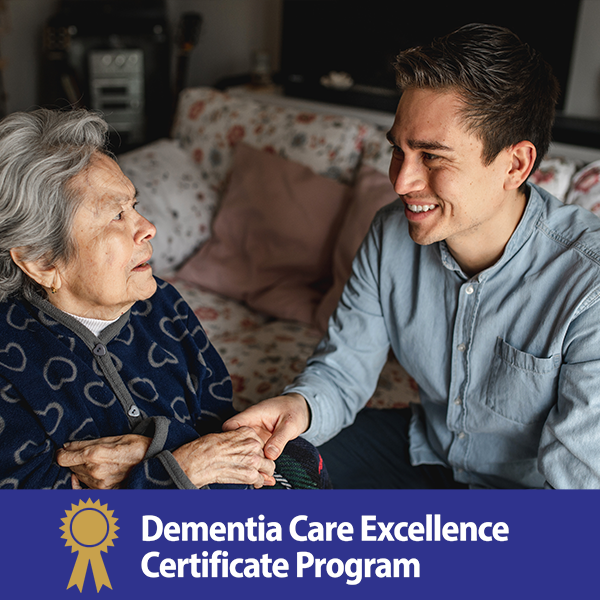 Benefits of the Dementia Care Excellence Program:
- Build confidence in caring for individuals living with dementia
- Strengthen communication and behavior management skills
- Promote dignity, safety, and person-centered care practices
- Improve caregiver and family support strategies
- Support professional development with accredited continuing education
- Help organizations enhance quality outcomes and staff competency
Whether caring for patients in hospitals, rehabilitation settings, long-term care, home health, or case management, ongoing dementia education helps healthcare professionals provide compassionate, informed, and meaningful care.
A Call to Compassion
This Alzheimer’s & Brain Awareness Month, take time to honor someone affected by dementia. Wear purple. Learn the warning signs. Support caregivers. Educate your staff. Advocate for research. Practice patience and kindness.
Most importantly, remember this:
Even when memories fade, human connection remains powerful.
Because every person deserves dignity.
Every caregiver deserves support.
And every memory matters.

References
Alzheimer’s Association. (2025). Challenge your mind for better brain health. https://www.alz.org/help-support/brain_health/challenge-your-mind
Alzheimer’s Association. (2025). 2025 Alzheimer’s disease facts and figures. https://www.alz.org/alzheimers-dementia/facts-figures
Centers for Disease Control and Prevention. (2024). Alzheimer’s disease and dementia. https://www.cdc.gov/alzheimers-dementia/index.html
Grotz, C., et al. (2025). Lifelong cognitive enrichment and Alzheimer’s disease risk. Neurology. https://www.neurology.org
National Institute on Aging. (2024). What is Alzheimer’s disease? U.S. Department of Health and Human Services. https://www.nia.nih.gov/health/alzheimers-and-dementia/what-alzheimers-disease
World Health Organization (WHO). (2023). Dementia fact sheet. https://www.who.int/news-room/fact-sheets/detail/dementia

